| Vessel Make: | Crayfishing Vessel |
|---|---|
| Vessel Weight: | 20T |
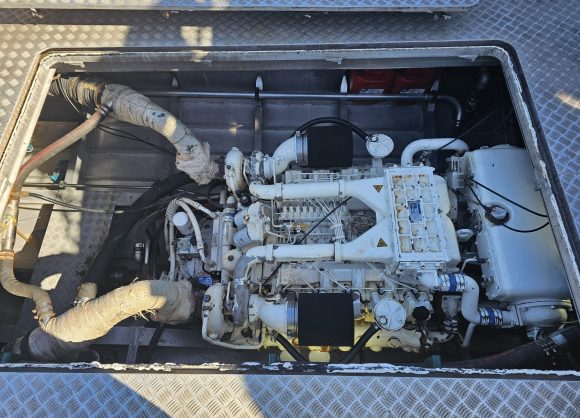
| Old Engine: | Doosan V180TIL |
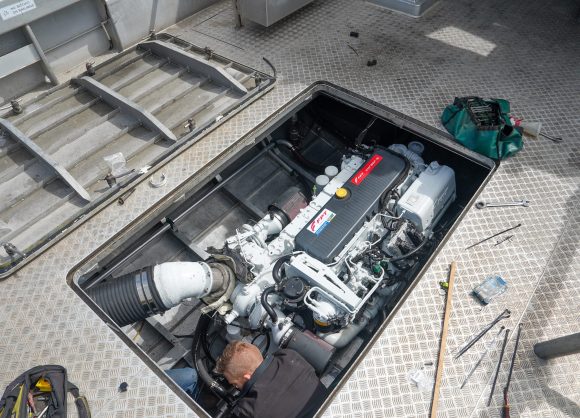
| New Engine: | FPT C16 1000 |
| Old Engine Work Hours: | 1,000 hours per year |
| New Engine Work Hours: | 3,000 hours per year |
| Fuel Consumption: | 23 L/h @ 1,200rpm |
| Max Speed: | 23 knots |
Tripling Annual Working Hours with a Future-Ready Engine Solution
Overview
For commercial crayfishing vessels, reliability isn’t a nice-to-have – it’s the difference between earning and tying up at the jetty. This recent commercial marine engine repower by THT demonstrates how the right engine selection can triple working hours per year, reduce fuel consumption, and secure the long-term future of a proven hull.
This project was completed on a commercial crayfishing (also known as lobster fishing) vessel, operating in WA’s demanding conditions where uptime, efficiency, and service life are critical.
Invest in Your Boat. Invest in Your Future. Invest in Your Livelihood.
The Original Setup
The vessel, a Gavin Mair Design, a name well respected in the commercial fishing industry for building strong, proven workboats.
The vessel was originally powered by a Doosan V180TIL, an older-style mechanical V10 marine engine.
- Rated power: 820HP @ 2,300rpm.
- Commercial rating: Approximately 1,000 hours per year.
- Annual usage: ~1,500 hours per year.
The engine has reached the end of its service life, having delivered everything it could. At this point, the owner faced common commercial dilemma: rebuild or repower.
Why Rebuilding Wasn’t the Answer
Rebuilding older mechanical marine engines is becoming increasingly impractical for commercial operators:
- Parts availability is limited and increasingly expensive.
- Labour time is significant.
- Rebuild timelines can stretch out.
- Most importantly – downtime directly affects livelihood.
For a commercial vessel, weeks or months out of the water is not just inconvenient — it’s lost income. The smarter investment was a brand-new, warranted marine engine, designed for modern commercial workloads.
Displacement Matters
Hull size and displacement play a critical role in engine longevity. For vessels like this Gavin Mair hull:
- Typical engine displacement ranges between 16L to 22L.
- The original engine displacement was 18L.
A common mistake is downsizing to a smaller displacement (e.g. 13L) simply because it appears cheaper. Smaller engines must work harder, increasing wear and reducing service life, especially in high-hour commercial use.
This repower focused on selecting the right displacement, not just the lowest upfront cost.
The Solution: FPT C16 Marine Engine
THT carefully selected the FPT C16 16-litre marine engine, a modern common-rail marine engine designed specifically for commercial applications. Key specifications:
- Displacement: 16L
- Configuration: Inline 6
- Dry Weight: 1,640kg (excellent power-to-weight ratio)
- Injection: Common rail
- Electronics: Bosch electronic manage system
- Warranty: Brand new factory warranty
Derated for Longevity
The engine was derated to 815HP to 2300rpm, placing it into a medium-duty commercial rating, designed for over 3,000 working hours per year.
This derating delivered major advantages:
- Tripled annual working hours (1,000 → 3,000 hrs/year).
- Reduced stress on internal components.
- Improved fuel efficiency and engine life.
Flexible Rating Options
The FPT C16 platform allows multiple commercial ratings:
- 1,000HP (1,000 hrs/year)
- 900HP
- 815HP
- 750HP
- 650HP and more
This flexibility allows engines to be matched precisely to vessel and workload.
Installation Efficiency
Thanks to correct engine selection and derating the FPT marine engine, we were able to reuse:
- ZF gearbox
- Propeller shaft
- Propeller
The engine slotted directly into place, reducing installation complexity and cost. An added benefit was more usable space in the engine room compared to the previous setup.
AMSA Compliance
As a commercial vessel under AMSA survey, weight compliance was critical.
- Weight different between old and new engine: ~100kg.
- Within 4% vessel weight tolerance.
- No survey changes required.
This ensured a smooth compliance process with no delays.
Control System Upgrade: Flexball Throttles
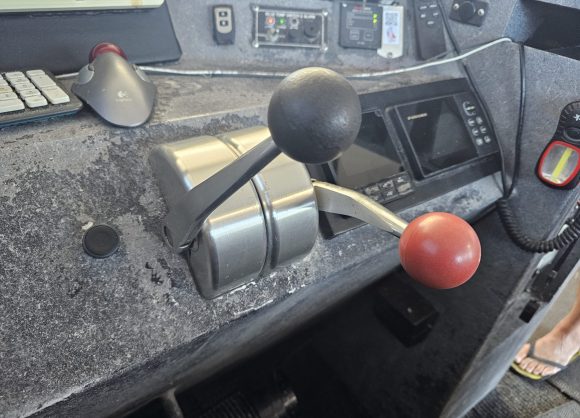
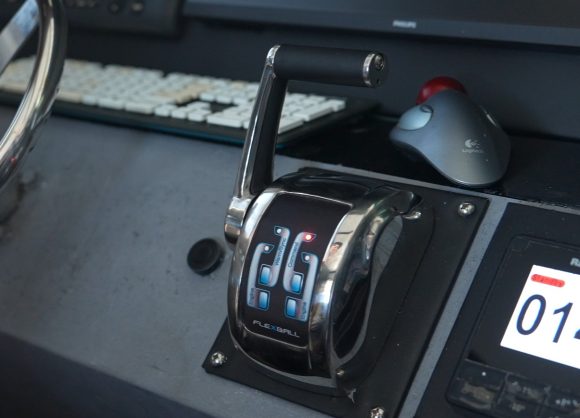
To complement the new engine, Flexball throttle controls were installed.
Why Flexball:
- Compatible with any mechanical or electronic engine/gearbox.
- Designed for commercial marine use.
- IP68 rated for harsh environments.
Three control stations were installed; in the wheelhouse, flybridge station at the top, and near the pot winch out at the back. This setup provides precise, reliable control exactly where operators need it – giving the vessel truly ‘flexible’ Flexball throttle control onboard.
Results
Doosan V180TIL FPT C16 (Derated)
820HP @ 2,300rpm 815HP @ 2,300rpm
~1,000 commercial hrs/year Designed for 3,000 + hrs/year
Noisy operation Significantly quieter and smoother
Visible exhaust smoke No smoke
Fuel consumption: ~23 L/hr at 1,200rpm
Cruise: 16 knots @ 1,800rpm
Max speed: 23 knots
The vessel now works longer, burns less fuel, and operates with far greater confidence offshore.
This repower highlights exactly what a modern commercial marine engine solution should deliver:
- Tripled annual working hours.
- Reduced fuel consumption.
- Improved reliability and owner comfort.
- Long-term protection of a proven hull.
At THT, we understand commercial vessels because we work with them every day. We know downtime costs money, reliability keeps boats working, and the right engine choice protects your livelihood.
If you’re operating a commercial crayfishing vessel and considering your next move – we can help.
📞 Get in touch with us today to discuss your repower options – (08) 9344 4844.